Solar design
Solar mounting
A solar array must stay secure through weather, maintenance, and the life of the building.
Review roof or ground conditions, layout, attachments, waterproofing, wind and seismic forces, access paths, clearances, wiring, grounding, and inspection details. Coordinate structural and electrical drawings and use current manufacturer instructions and local requirements.
Field measurement example
Measuring a solar installation
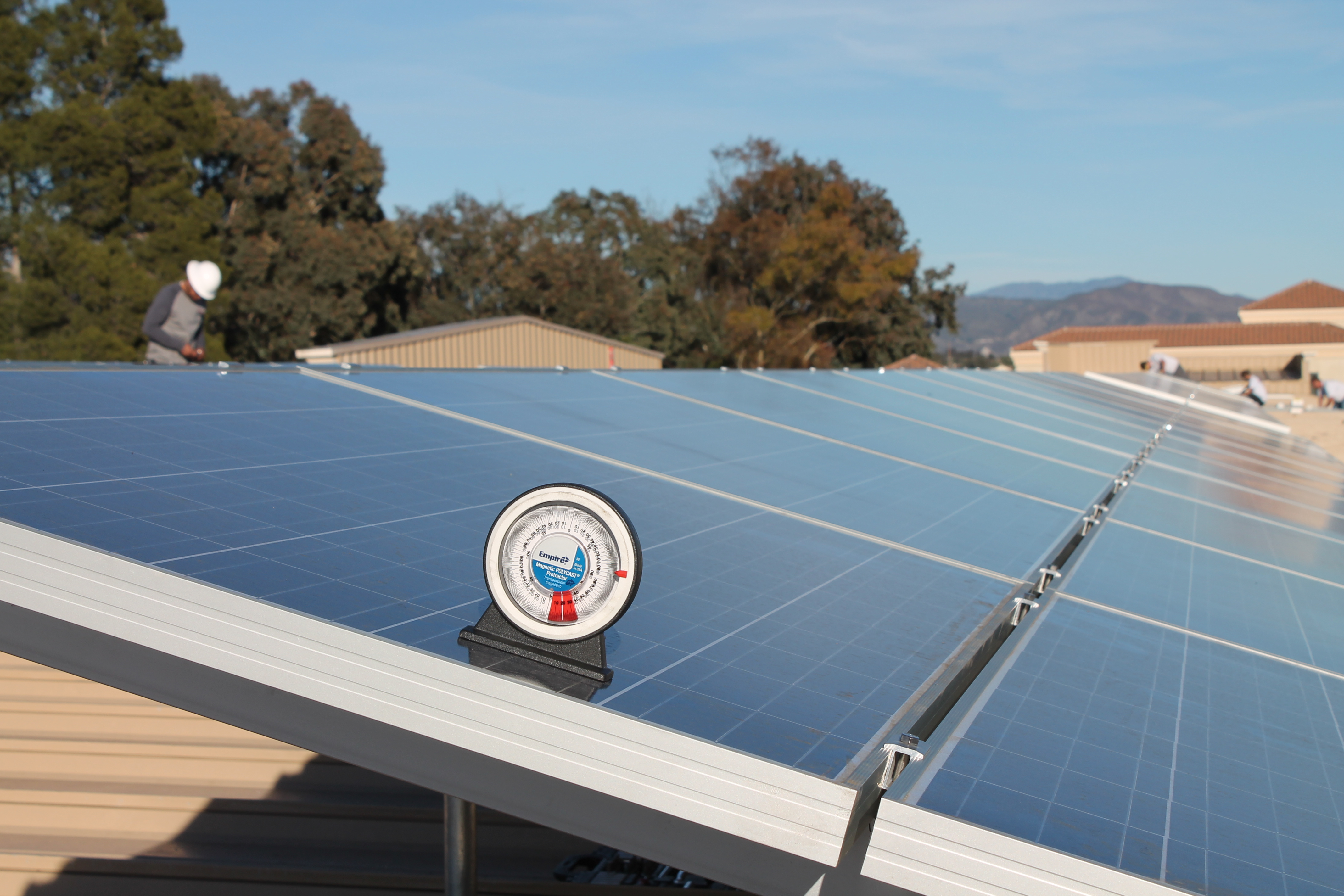
The photograph shows a field worker using an angle gauge or pitch measurement tool on a rooftop solar array. Measurements help verify the roof or racking slope, panel alignment, row geometry, and installation layout.
What to document in the field
Record roof pitch, array azimuth, row spacing, edge setbacks, attachment locations, clearances, and shading conditions. Confirm measurements against approved drawings and current racking installation limits.
A single photograph does not establish the roof angle, structural capacity, waterproofing, electrical compliance, or final system performance. Use calibrated instruments, safe roof access, and current construction documents.